Oranjee
Oranjee is the Amsterdam restaurant where Augustus Waters and Hazel Grace Lancaster share a transformative dinner on their first evening in the city, a meal that crystallizes their bond and is unexpectedly underwritten by the reclusive author Peter Van Houten. The evening represents the fulfillment of Augustus's wish to bring Hazel to Amsterdam and stands as one of the most significant and symbolically charged scenes in their relationship, blending romance, mortality, and the tension between grand gestures and authentic connection.
Setting and Atmosphere
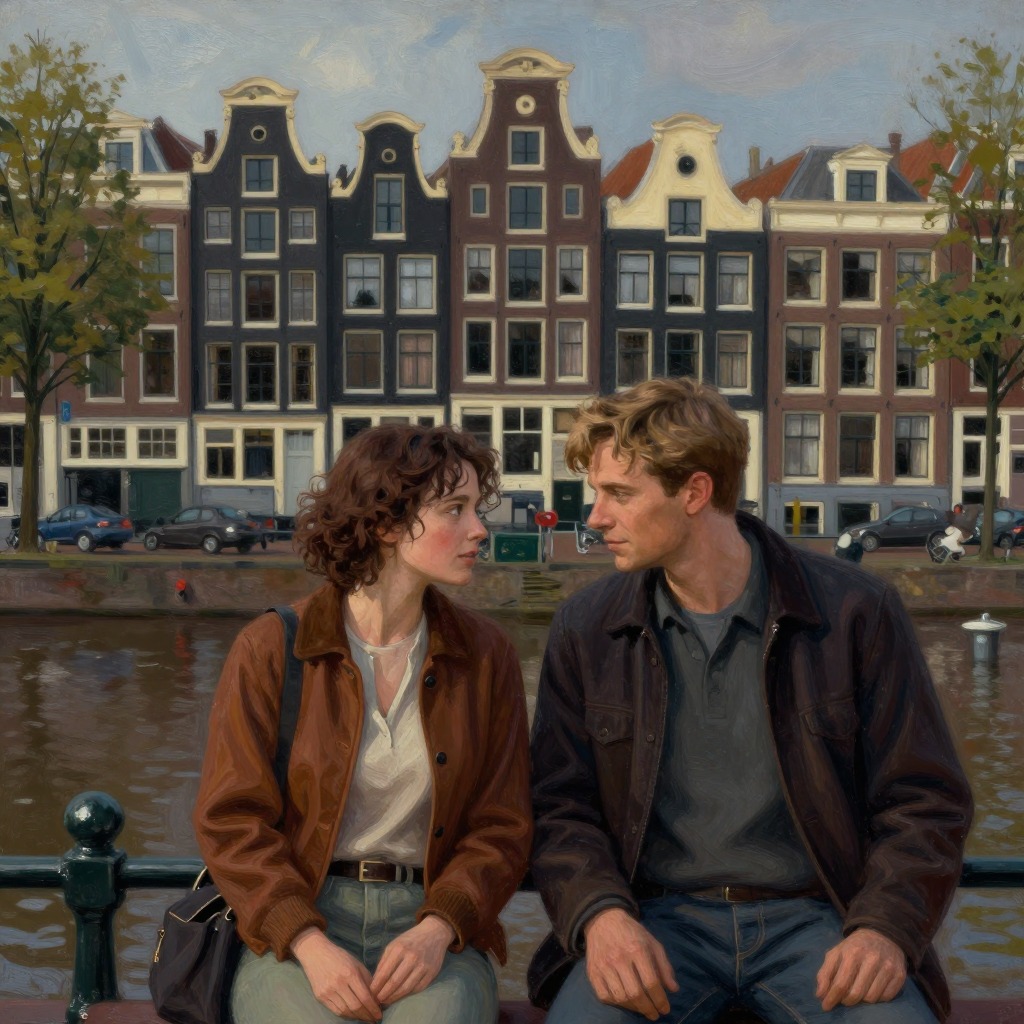
Oranjee is situated on a street split by a beautiful canal, with outdoor seating on a concrete outcropping right at the edge of the water. The restaurant's location places diners inches from the canal, where little boats are moored at brick banks, some half full of rainwater, and houseboats float on pontoons. On the evening of Hazel and Augustus's visit, the air is filled with millions of pale elm seeds—described as "Amsterdam's spring snow"—that drift like confetti from the trees lining the canals, gathering in the wind like flocking birds. The hostess greets them as "Mr. and Mrs. Waters" and presents them with a complimentary gift of champagne, which the waiter describes using Dom Pérignon's famous words: "Come quickly: I am tasting the stars." The waiter, a sturdy young man with wavy blond hair and a delicious accent, lightly brushes an elm seed from Hazel's bare shoulder, remarking that the confetti is "very annoying." Augustus, wearing his black death suit—a perfectly tailored narrow-lapel suit he had bought in case he died from his original cancer—and Hazel, in a blue print sundress, sit at a white-tableclothed table as cyclists pedal past and the canal water becomes choked with the confetti seeds.
The Meal and Its Significance
The dinner at Oranjee is a multi-course chef's choice menu, with Hazel's vegetarianism accommodated without issue. The courses include Belgian white asparagus with a lavender infusion, dragon carrot risotto, sweet-pea sorbet, and green garlic gnocchi with red mustard leaves, followed by a dessert of crémeux surrounded by passion fruit. Hazel and Augustus drink champagne—the first time either has had it—and their conversation devolves into fragmented celebrations of the food's deliciousness. The meal is paid for by Peter Van Houten, a fact that delights Augustus and reinforces the sense that the trip is a kind of fairy-tale fulfillment. Yet beneath the surface perfection, Hazel feels a tension: the evening feels staged, like someone has tried to create the Amsterdam of her imagination, and she cannot forget that the dinner, like the trip itself, is a cancer perk. The silence between them carries an undercurrent of unspoken fears, and when Augustus reveals that the suit he is wearing is his death suit—bought when he planned his own funeral—the conversation turns to mortality, the afterlife, and the meaning of a life. Augustus confesses his fear of oblivion and his belief in a capital-S Something, while Hazel admits she thinks forever is an incorrect concept. Their disagreement about whether a life must be lived or died for a greater good leads to a moment of tension, with Hazel accusing Augustus of being mean for implying that only lives lived for something matter. He apologizes, and they reconcile, but the evening leaves both of them aware of the fragility of their time together.
Consequences and Aftermath
The dinner at Oranjee marks a turning point in Hazel and Augustus's relationship. It is the first time they have been alone together in a romantic setting, and it deepens their intimacy even as it exposes their fundamental differences about death and meaning. The meal also serves as a prelude to their visit to Peter Van Houten the next morning, which ends disastrously when the drunken author refuses to answer Hazel's questions about the end of An Imperial Affliction. After the dinner, Hazel and Augustus walk along the canal, sit on a park bench surrounded by old rusty bicycles, and talk about the book and their theories about what happens to the characters. Augustus reveals the story of his past relationship with Caroline Mathers, a girl who died of brain cancer, and tells Hazel that it would be "a privilege to have my heart broken by you." The evening ends with them returning to the Hotel Filosoof, where they will later have sex for the first time. Oranjee thus becomes the setting where the romantic ideal of the trip collides with the reality of Augustus's impending death, and where Hazel begins to understand that her attempt to protect him from being hurt by her is both futile and unnecessary.
Narrative Role and Evaluation
Oranjee functions as the symbolic heart of the Amsterdam trip—a place where the novel's themes of love, mortality, and the search for meaning converge. The restaurant's canal-side setting, with its falling confetti and champagne, creates a fairy-tale atmosphere that contrasts sharply with the harsh truths that emerge during the conversation. The dinner is a microcosm of the entire relationship: beautiful, carefully orchestrated, and haunted by the knowledge that it cannot last. Augustus's death suit, the champagne that tastes like stars, and the elm seeds that the waiter finds annoying but Hazel and Augustus find magical all reinforce the novel's central tension between the desire for transcendence and the inevitability of oblivion. Oranjee is also the place where Hazel first fully articulates her resistance to Augustus's heroic narrative, insisting that his obsession with dying for something is a mean thing to say to someone who is terminal. The restaurant thus becomes a site of both romantic fulfillment and philosophical confrontation, a place where the characters must reckon with the limits of what even the most perfect evening can provide.